The FOB shipping meaning is simple at its core: FOB stands for Free On Board, and it means the seller's job ends once the goods are loaded on board the ship at the port of shipment. From that moment the buyer pays the ocean freight, carries the risk of loss or damage, and handles import customs at the other end. A quote of "FOB Shanghai" is the price of the goods delivered onto a vessel in Shanghai, and nothing more.
The trouble is that FOB means two different things depending on who wrote the contract. In international trade it is an Incoterms rule with a fixed delivery point on the ship. In US domestic sales it is a term from the Uniform Commercial Code, written as "FOB shipping point" or "FOB destination", with its own logic about title and risk. This guide covers both, the cost split line by line, the customs value trap between FOB and CIF, and how to write an FOB term that holds up when something goes wrong.
What FOB Shipping Means Under Incoterms 2020
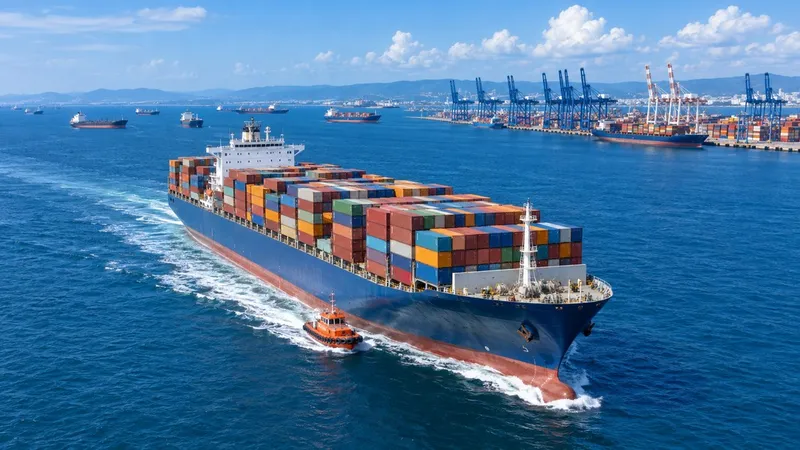
FOB is one of the eleven Incoterms 2020 rules published by the International Chamber of Commerce. The ICC's own rule text says the seller delivers the goods on board the vessel nominated by the buyer, at the named port of shipment. The risk of loss or damage transfers when the goods are on board the vessel, and the buyer bears all costs from that moment onwards.
Three details in that definition do a lot of work. The vessel is nominated by the buyer, so the buyer books the ocean freight and tells the seller which ship to load. The port is named, which is why an FOB term is always written with a place after it, such as "FOB Rotterdam" or "FOB Ningbo". And the delivery point is on board, not at the factory gate and not alongside the ship.
FOB is also one of the oldest trade terms in use. The ICC's training arm traces it back to the early 1800s, when ocean shipping carried most international trade and containers did not exist. That history explains both its popularity and its blind spots, which come up below.
FOB is a sea and inland waterway rule
The ICC is explicit that FOB is to be used only for sea or inland waterway transport, where the parties intend to deliver by placing goods on board a vessel. An FOB term on an air shipment or a truck move is a misuse of the rule, and it leaves the delivery point open to argument because there is no vessel to load.
Who Pays What Under FOB
The cost split follows the delivery point. Everything before the goods are on board is the seller's, everything after is the buyer's. The commercial invoice under FOB covers the goods plus export clearance and documentation costs, according to the ICC's comparison of the F rules.
| Cost or task | Seller | Buyer |
|---|---|---|
| Transport from the seller's premises to the port | Yes | |
| Export customs clearance | Yes | |
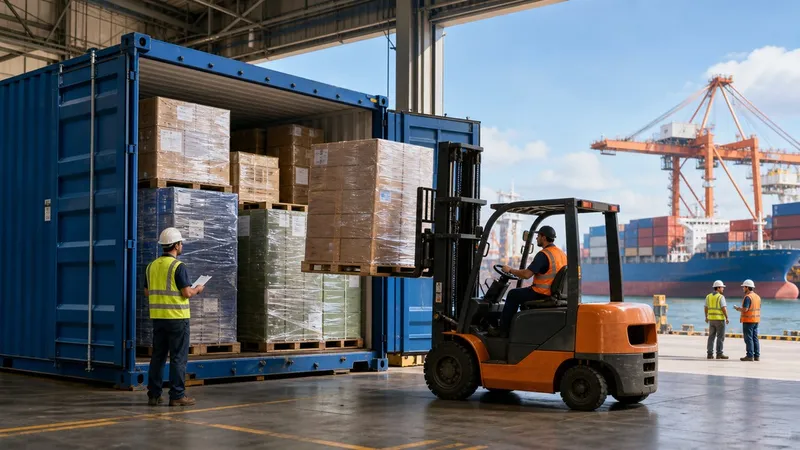
| Loading on board the nominated vessel | Yes | |
| Ocean freight to the destination port | Yes | |
| Cargo insurance for the voyage | If wanted | |
| Unloading and destination port charges | Yes | |
| Import clearance, duty and taxes | Yes |
The seller has no obligation to clear the goods for import, to handle transit customs through third countries, or to pay any import duty. Those sit entirely with the buyer.
Insurance deserves a second look. An FOB price excludes ocean freight and insurance, and the risk is already yours once the cargo is on board. If you want cover for the voyage, you arrange it yourself, and the cargo insurance options for importers work very differently depending on the terms you buy on.
When Risk Moves to the Buyer
Under Incoterms 2020, risk passes at one physical moment: when the goods are on board. A crate dropped on the quay before loading is the seller's loss. The same crate damaged in the hold an hour later is the buyer's.
That makes FOB a strong term for the buyer who wants control of the ocean leg. You pick the carrier, negotiate the freight rate and decide the routing. The cost of that control is that you carry the risk for the whole voyage, so any loss at sea lands on your books, not the seller's.
When the buyer's vessel is late
FOB contains a rule that catches many buyers off guard. The buyer must tell the seller in time the vessel's name and the loading point within the port. If the seller has the goods ready on the agreed date but the buyer gives late notice, or the nominated vessel arrives late, or the ship closes for cargo earlier than notified, the ICC says the buyer assumes the risks and costs, even though the goods were never loaded.
In practice, a missed vessel nomination can move the risk to you while the cargo is still sitting on the quay. This is where a delayed ship stops being a scheduling nuisance and becomes a contract issue. Knowing when your nominated vessel will actually berth, rather than when it was supposed to, is what lets you warn the seller or rebook before the deadline passes. Primo Nautic shows the captain's reported ETA beside an AI-calculated route ETA and sends delay notifications, which gives you an early signal that a nomination is at risk.
FOB Shipping Point vs FOB Destination
Inside the United States, FOB usually means something else. Section 2-319 of the Uniform Commercial Code treats FOB at a named place as a delivery term, even when it appears only next to a price. It splits into two versions.
Under FOB shipping point, the seller must ship the goods from the named place and bear the expense and risk of putting them into the possession of the carrier. Once the carrier has them, the risk is the buyer's.
Under FOB destination, the seller must transport the goods at its own expense and risk to the named destination and tender delivery there. The seller carries the risk for the entire journey.
The UCC also has a third form closer to the Incoterms rule. When the term is "FOB vessel", the seller must in addition load the goods on board at its own expense and risk, and the buyer must name the vessel.
Why the two FOBs collide
The UCC version is a domestic default that applies "unless otherwise agreed". The Incoterms version applies only when the contract says so. A US buyer who writes "FOB Los Angeles" on a purchase order may mean FOB destination, while a Chinese supplier reading the same words may assume the Incoterms rule at a named port of shipment. If a contract does not say which FOB it means, the parties can be arguing about two different delivery points.
Who owns goods in transit
Accountants care about this split because it decides whose balance sheet holds goods on the road or at sea. Deloitte's guidance on revenue recognition says that under FOB shipping point, title passes when the goods are shipped and the buyer is responsible for any loss in transit. Under FOB destination, title does not pass until delivery and the seller is responsible for any loss.
That changes when a seller can book the sale. Deloitte notes that shipping terms are relevant to two of the five indicators of transfer of control under ASC 606, so a seller shipping FOB destination generally recognises revenue on arrival, not on dispatch.
FOB and Containers: Why the ICC Points to FCA
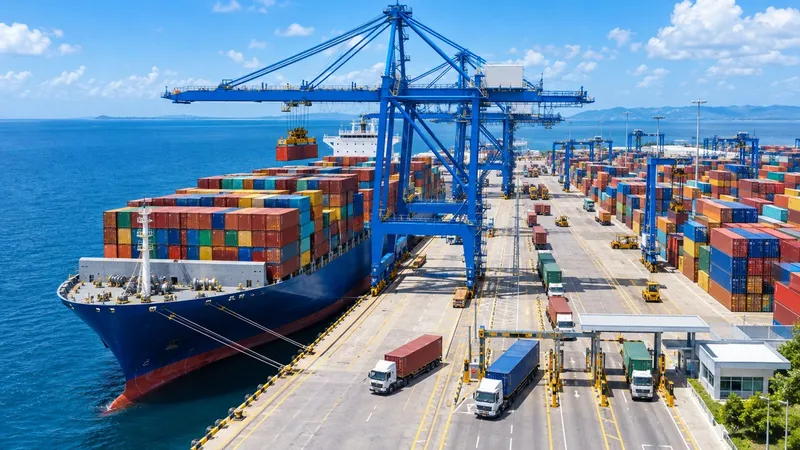
Containers are where FOB fits least. A container is usually handed to the carrier at a terminal, then stacked in the yard, sometimes for days, before a crane lifts it on board. The seller has lost control of the box long before the delivery point FOB names.
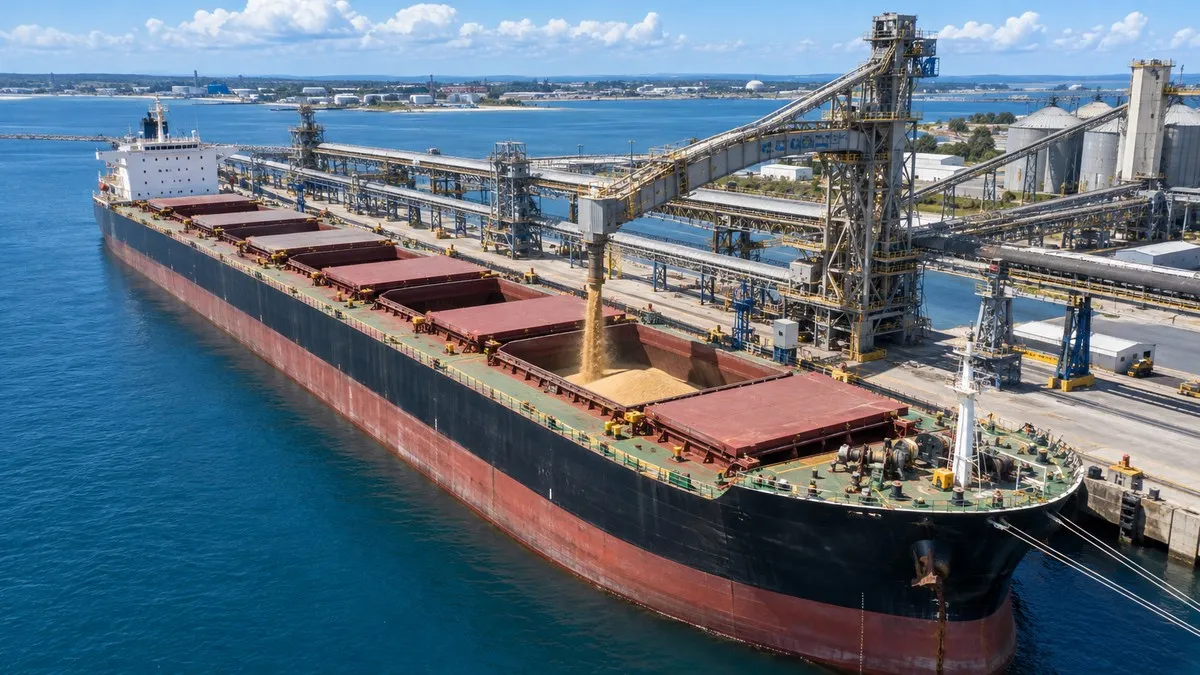
The ICC says plainly that FOB is not appropriate where goods are handed over to a carrier at a container terminal, and that the parties should consider FCA, Free Carrier, instead. Its Incoterms checklist reserves FOB for general cargo or bulk commodities loaded on board, or for containers the seller loads directly in the traditional way. The ICC lists the cargoes that suit FOB as minerals, crude and refined oil, gas, cement, steel, grains and brand-new vehicles.
FOB still turns up on container shipments all the same. Our guide to all eleven Incoterms walks through FCA and the other rules that fit containerised freight better.
FOB, CIF and the Customs Value
The difference between FOB and CIF, Cost Insurance and Freight, matters beyond who books the ship. Customs authorities calculate import duty on a value that either includes or excludes the ocean freight, and the United States and the European Union do it in opposite ways.
The United States values imports on an FOB basis
US customs duty is based on transaction value, and the federal rules on transaction value exclude international freight and insurance when they are identified separately. One worked example in the regulation shows a $150 ocean freight and insurance charge being taken out of the declared value for exactly that reason. CBP's own help pages state that a CIF price is not the value to declare.
So if you buy CIF and import into the United States, you need the freight and insurance shown separately on the invoice, or you risk paying duty on the shipping cost.
The European Union values imports on a CIF basis
The EU works the other way. Its customs valuation rules add the costs of transport and related costs up to the point of entry into the customs territory of the Union. The transaction value method applies to about 95% of EU trade, according to the European Commission.
The Netherlands Chamber of Commerce gives a clear example. If the goods cost €20,000 and the shipping and insurance to the EU border cost €5,000, the customs value is €25,000. An importer buying FOB into the EU still pays duty on the freight, so the FOB price alone understates the landed cost.
How to Write an FOB Term That Holds Up
Vague wording turns FOB into an argument the rule itself would have settled. A few habits close those gaps:
- Name the rule set and the version, such as "FOB Ningbo, Incoterms 2020", so nobody can read it as the UCC default.
- Name the port of shipment precisely, and the terminal if the port has several.
- Agree the vessel nomination deadline in writing, since a late nomination moves risk to the buyer.
- Use FCA instead when the goods travel in containers handed over at a terminal.
- On US domestic orders, write "FOB shipping point" or "FOB destination" in full, never FOB alone.
- Ask for freight and insurance as separate invoice lines when buying CIF into the United States.
Each of these costs nothing at the quoting stage and settles the questions that otherwise surface only after a loss.
Tracking an FOB Shipment From the Load Port
Under FOB, the cargo becomes your responsibility the moment it is on board, so that is the moment to start watching it. The bill of lading gives you the vessel name, and from there you can follow the ship yourself rather than waiting for updates from a forwarder.
Primo Nautic tracks vessels by name, IMO number or MMSI number on live AIS data, and its Cargo Shipment purpose turns the raw position into precise, logistics-focused updates with arrival and departure alerts. For an FOB buyer, the useful parts are the dual ETA and the delay notifications, because you carry the risk and the cost of every day the voyage runs late.
Conclusion
FOB means the seller delivers once the goods are on board the vessel at the named port of shipment, and from that moment the buyer pays the freight and carries the risk. Under Incoterms 2020 it is a sea and inland waterway rule meant for bulk and break-bulk cargo, with FCA the better fit for containers handed over at a terminal.
In US domestic contracts, FOB shipping point and FOB destination follow the UCC instead, and they decide who owns goods in transit and when a seller can book revenue. The customs value adds one more layer: the United States charges duty on an FOB basis, the European Union on a CIF basis. Naming the rule set, the port and the vessel deadline in the contract removes most of the ambiguity before the cargo ever moves.