




Introduction to Maritime Cybersecurity
The Digital Transformation of the Shipping Industry
New and advanced technologies are continuously being integrated in the shipping industry to enhance efficiency, safety, and sustainability. This development encompasses various aspects of maritime operations.
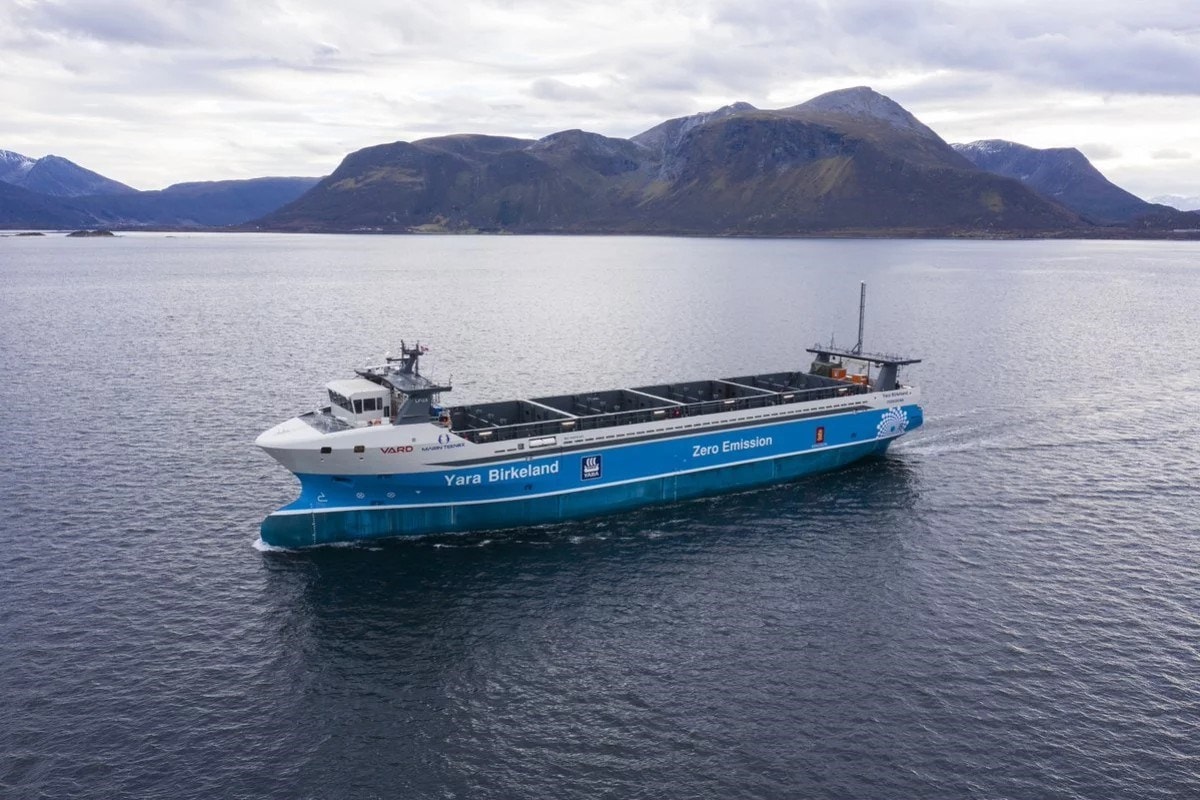
Autonomous vessels are one of the most significant developments in the shipping industry. Vessels such as the Yara Birkeland move towards crewless vessels that only utilize sensors, artificial intelligence, and machine learning in order to navigate and operate with minimal human intervention. However, although this has caused worry among dockworkers regarding job loss, ports have also started to adopt automation, streamlining their operations. Nevertheless, modern technologies aim to enhance operational efficiency of ports, reduce environmental impact, and bolster security measures.
Maritime informatics is another emerging technology that focuses on the use of information systems, data sharing, and analytics to improve various aspects of maritime transportation. The enhanced data provided by maritime informatics can lead to improved efficiency, safety and ecological sustainability during transport. Crucially, this ecological aspect is one of the most important ones when it comes to the modernization of the shipping industry. By optimizing routes, improving fuel efficiency, and facilitating the adoption of alternative fuels, digital tools contribute to reducing greenhouse gas emissions. A good example of this is the reintroduction of sails that are augmented with modern technology, showing how the industry attempts to lower its carbon footprint.
Defining Maritime Cybersecurity and Cyber Risk Management
With the emergence and developments of these new technologies, maritime cybersecurity is being positioned at the forefront of efforts to protect global shipping operations, ensuring the safety, reliability, and resilience of maritime infrastructure. Maritime cybersecurity can be defined as the integration of information technology (IT) and operational technology (OT) security to protect vessels, ports, and maritime infrastructure from cyber threats. Maritime cybersecurity aims to safeguard navigation systems, cargo, and communication networks from cyber risks such as phishing, ransomware, GPS spoofing, and denial-of-service attacks. Given the industry's reliance on automated and interconnected systems, strong cybersecurity measures are essential to detect, prevent, and respond to evolving cyber threats in the maritime sector.

Cyber risk management, on the other hand, can be described as the process of identifying, assessing, and mitigating cyber threats that could impact an organization's operations. This process involves evaluating vulnerabilities, prioritizing risks, and implementing strategies to minimize potential security breaches. While cybersecurity is focused on protecting systems, networks, and data from attacks, cyber risk management takes a broader approach by integrating risk assessment, incident response planning, and regulatory compliance into security strategies. In essence, the difference between both of these vital security measures is proactive decision-making on the one hand and defensive measures on the other.
The Importance of Cybersecurity in the Maritime Industry
Given the increasing reliance of the maritime industry on digital technology, it is easy to see how cybersecurity became a critical component of global trade and logistics. Since 90% of global trade is conducted via shipping, any cyberattack on vessels, ports, or supply can have devastating widespread consequences. Because of this, the main role of cybersecurity is to protect these delicate systems from potential exploitation by criminals. As already mentioned, many modern ships rely on interconnected Operational Technology (OT) and Information Technology (IT) systems, making them susceptible to cyber intrusions. A single breach could compromise engine controls, navigation routes, or port operations, leading to delays and security risks.
Furthermore, cyberattacks can disrupt automated cargo handling, interfere with communication systems, and even manipulate GPS signals, causing ships to go off course. The financial impact extends beyond immediate losses, affecting insurance costs, regulatory compliance, and trade relations. For this reason, the importance of strengthening cybersecurity frameworks such as real-time threat detection, employee training, and AI-driven security solutions cannot be understated. Ultimately, investing in cybersecurity entails protecting global supply chains, maritime safety, and economic stability, reducing vulnerabilities in an increasingly digitalized industry.