




Manoeuvres
Sailing vessels (wind on a different side)
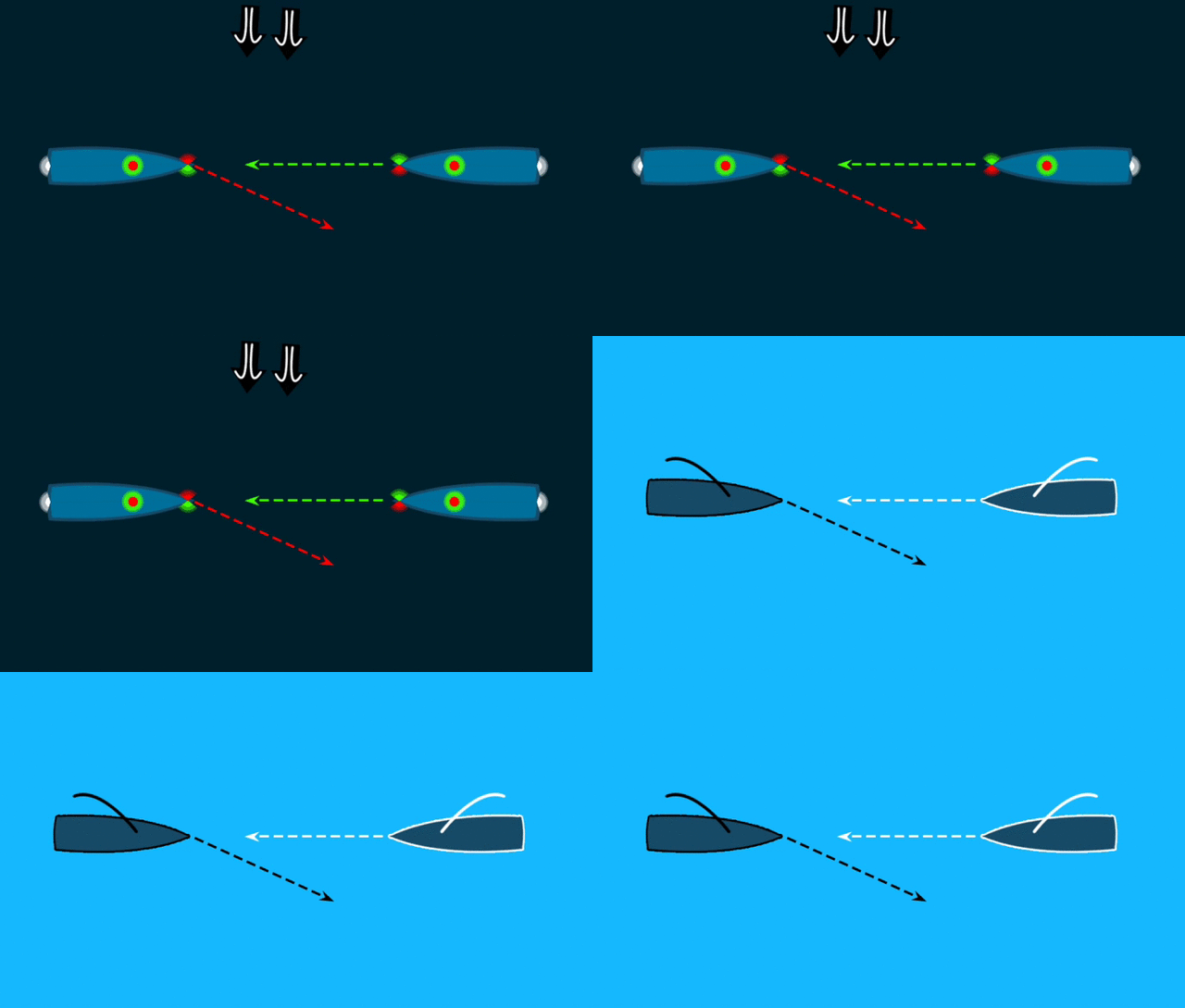
Sailing vessels (wind on a different side)
(a) When two sailing vessels are approaching one another, so as to involve risk of collision, one of them shall keep out of the way of the other as follows:
(i) when each has the wind on a different side, the vessel which has the wind on the port side shall keep out of the way of the other;
(iii) if a vessel with the wind on the port side sees a vessel to windward and cannot determine with certainty whether the other vessel has the wind on the port or on the starboard side, she shall keep out of the way of the other.
(b) For the purposes of this Rule the windward side shall be deemed to be the side opposite to that on which the mainsail is carried or, in the case of a square‑rigged vessel, the side opposite to that on which the largest fore‑and‑aft sail is carried.
Sailing vessels (wind on a same side)
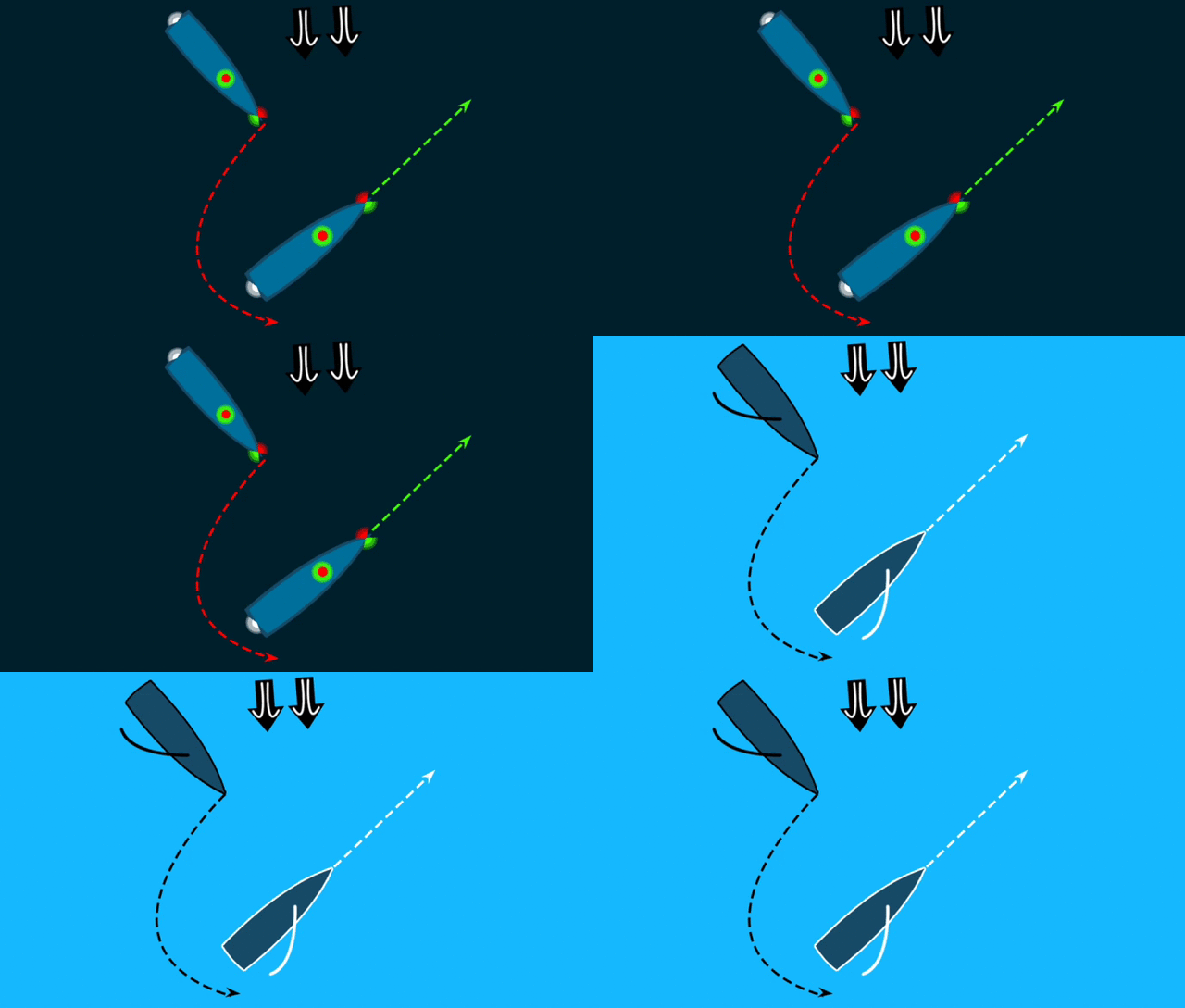
Sailing vessels (wind on a same side)
(a) When two sailing vessels are approaching one another, so as to involve risk of collision, one of them shall keep out of the way of the other as follows:
(ii) when both have the wind on the same side, the vessel which is to windward shall keep out of the way of the vessel which is to leeward;
(iii) if a vessel with the wind on the port side sees a vessel to windward and cannot determine with certainty whether the other vessel has the wind on the port or on the starboard side, she shall keep out of the way of the other.
(b) For the purposes of this Rule the windward side shall be deemed to be the side opposite to that on which the mainsail is carried or, in the case of a square‑rigged vessel, the side opposite to that on which the largest fore‑and‑aft sail is carried.
Overtaking
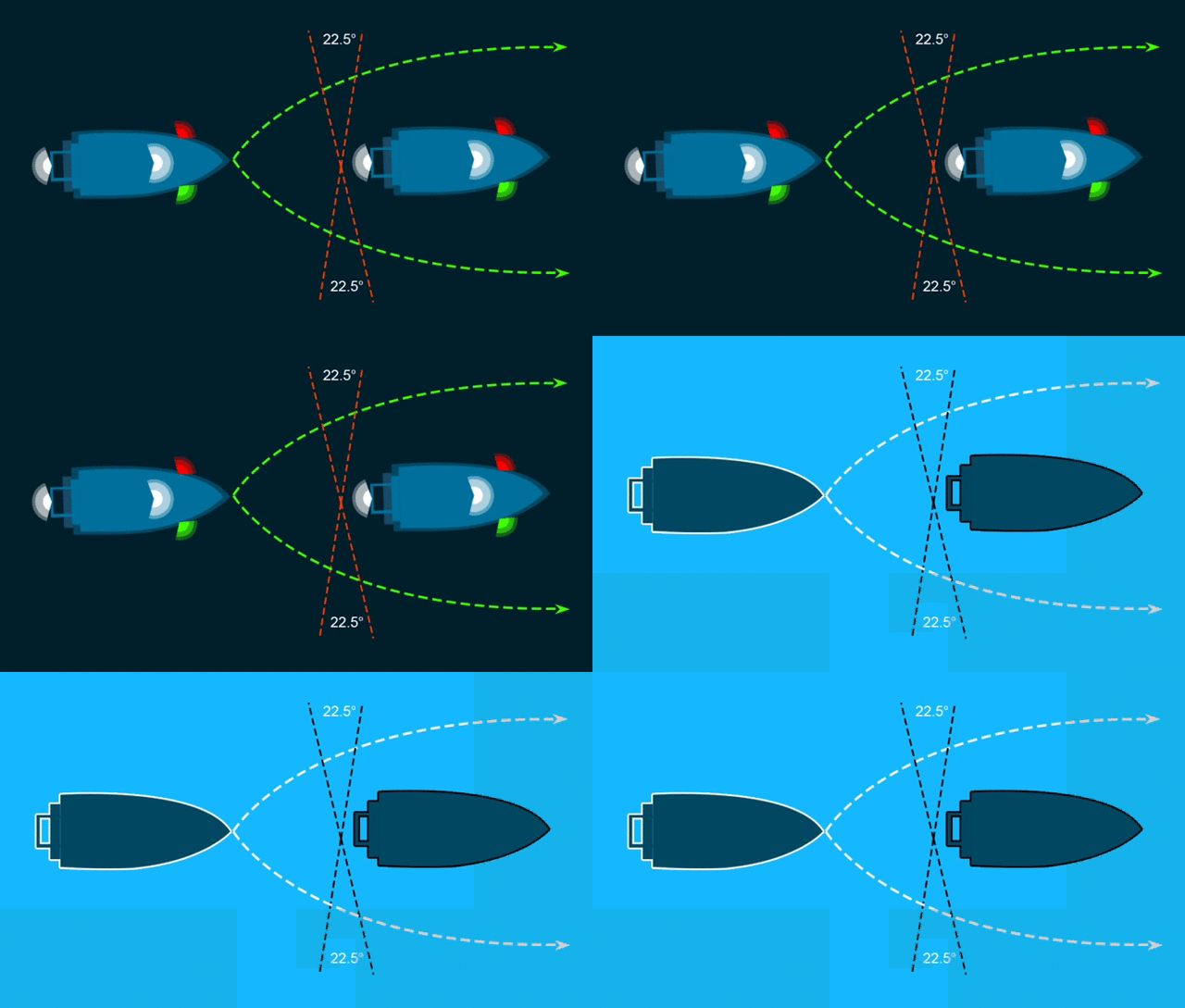
Overtaking
(a) Any vessel overtaking any other shall keep out of the way of the vessel being overtaken.
That means that regardless that you might be sailing a yacht you must still keep out of the way of a power driven vessel if you are overtaking them.
(b) A vessel shall be deemed to be overtaking when coming up with another vessel from a direction more than 22.5 degrees abaft her beam, that is, in such a position with reference to the vessel she is overtaking, that at night she would be able to see only the sternlight of that vessel but neither of her sidelights.
(c) When a vessel is in any doubt as to whether she is overtaking another, she shall assume that this is the case and act accordingly.
Doubt about whether you are overtaking is more likely to happen during the day. For example if you were approaching from green 110° you would be crossing, but from green 115° you would be overtaking. At night a stern light would clearly indicate the difference, but in daytime it is less easy to determine accurately.
(d) Any subsequent alteration of the bearing between the two vessels shall not make the overtaking vessel a crossing vessel within the meaning of these Rules or relieve her of the duty of keeping clear of the overtaken vessel until she is finally past and clear.
Head-on situation
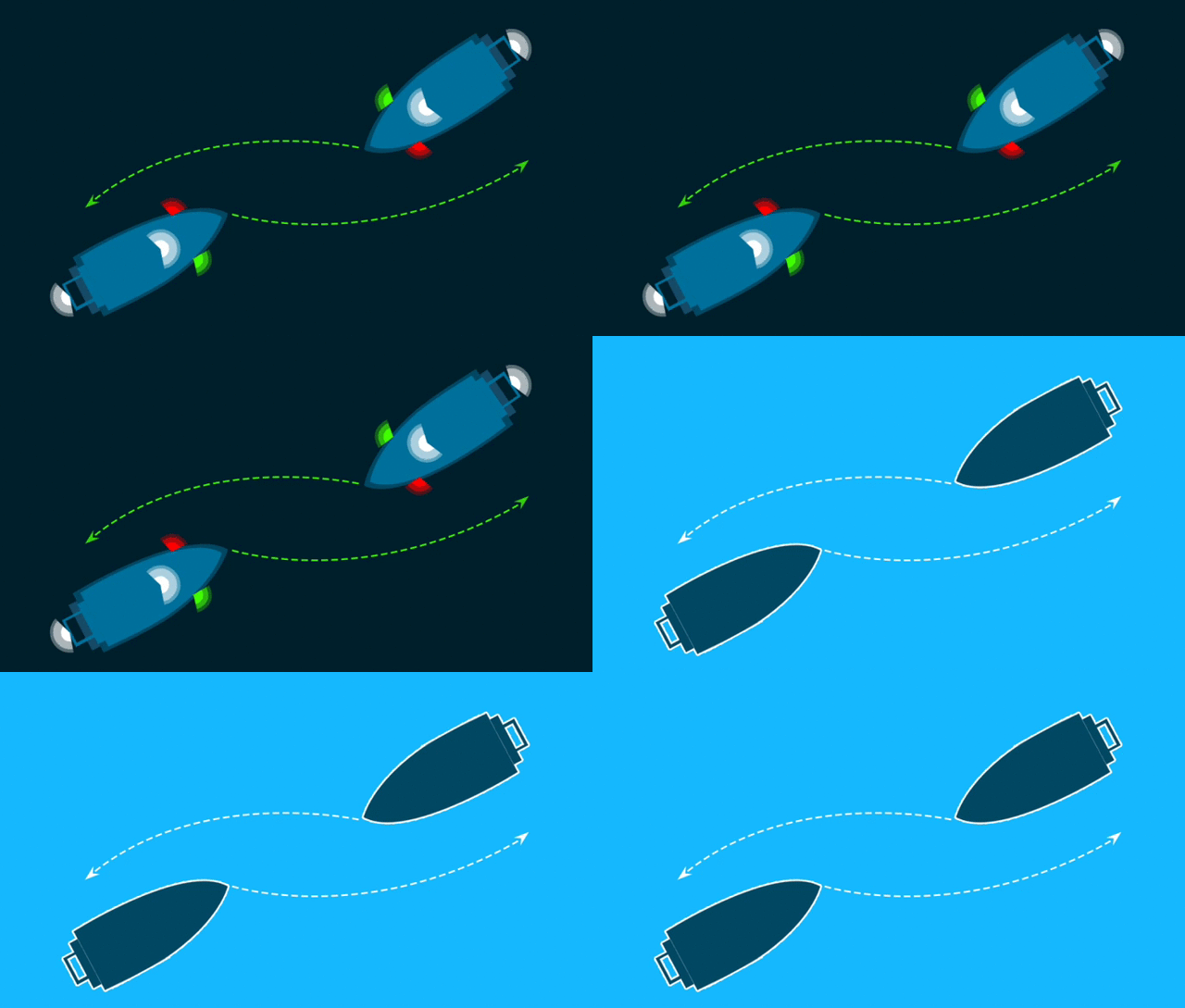
Head-on situation
(a) When two power-driven vessels are meeting on reciprocal or nearly reciprocal courses so as to involve risk of collision each shall alter her course to starboard so that each shall pass on the port side of the other.
(b) Such a situation shall be deemed to exist when a vessel sees the other ahead or nearly ahead and by night she could see the masthead lights of the other in a line or nearly in a line and/or both sidelights and by day she observes the corresponding aspect of the other vessel.
(c) When a vessel is in any doubt as to whether such a situation exists she shall assume that it does exist and act accordingly.
Crossing situation
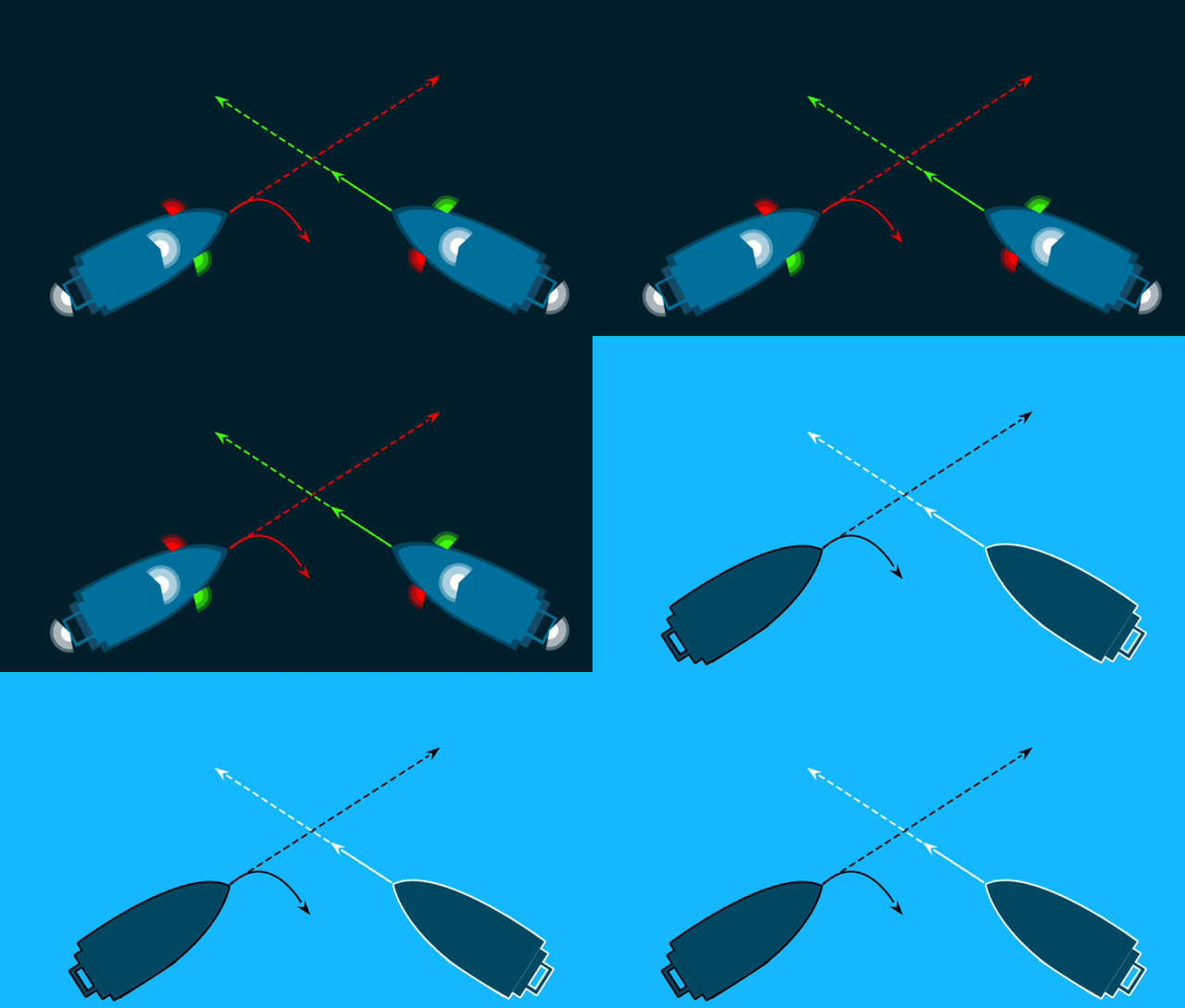
Crossing situation
When two power-driven vessels are crossing so as to involve risk of collision, the vessel which has the other on her own starboard side shall keep out of the way and shall, if the circumstances of the case admit, avoid crossing ahead of the other vessel.
Action by stand-on vessel
Action by stand-on vessel
(a) Where one of two vessels is to keep out of the way the other shall keep her course and speed.
(ii) The latter vessel may however take action to avoid collision by her manoeuvre alone, as soon as it becomes apparent to her that the vessel required to keep out of the way is not taking appropriate action in compliance with these Rules.
(b) When, from any cause, the vessel required to keep her course and speed finds herself so close that collision cannot be avoided by the action of the give-way vessel alone, she shall take such action as will best aid to avoid collision.
(c) A power-driven vessel which takes action in a crossing situation in accordance with subparagraph (a)(ii) of this Rule to avoid collision with another power‑driven vessel shall, if the circumstances of the case admit, not alter course to port for a vessel on her own port side.
(d) This Rule does not relieve the give-way vessel of her obligation to keep out of the way.